

on being an unorthodox reader
i'd rather give up than niche down

Books have always played a huge part in my life.
Reading, along with writing, is perhaps the first skill I remember pursuing and enjoying as a child, barely more than a toddler really, and even before I knew how to read my mom always made sure I had some sort of book in my tiny little hands.
Even now, I introduce myself to people as a reader first and foremost: reading books and generally orbiting around that world is my main hobby. And yet, in the last few years, the gravitational pull of that orbit has been getting weaker and weaker.
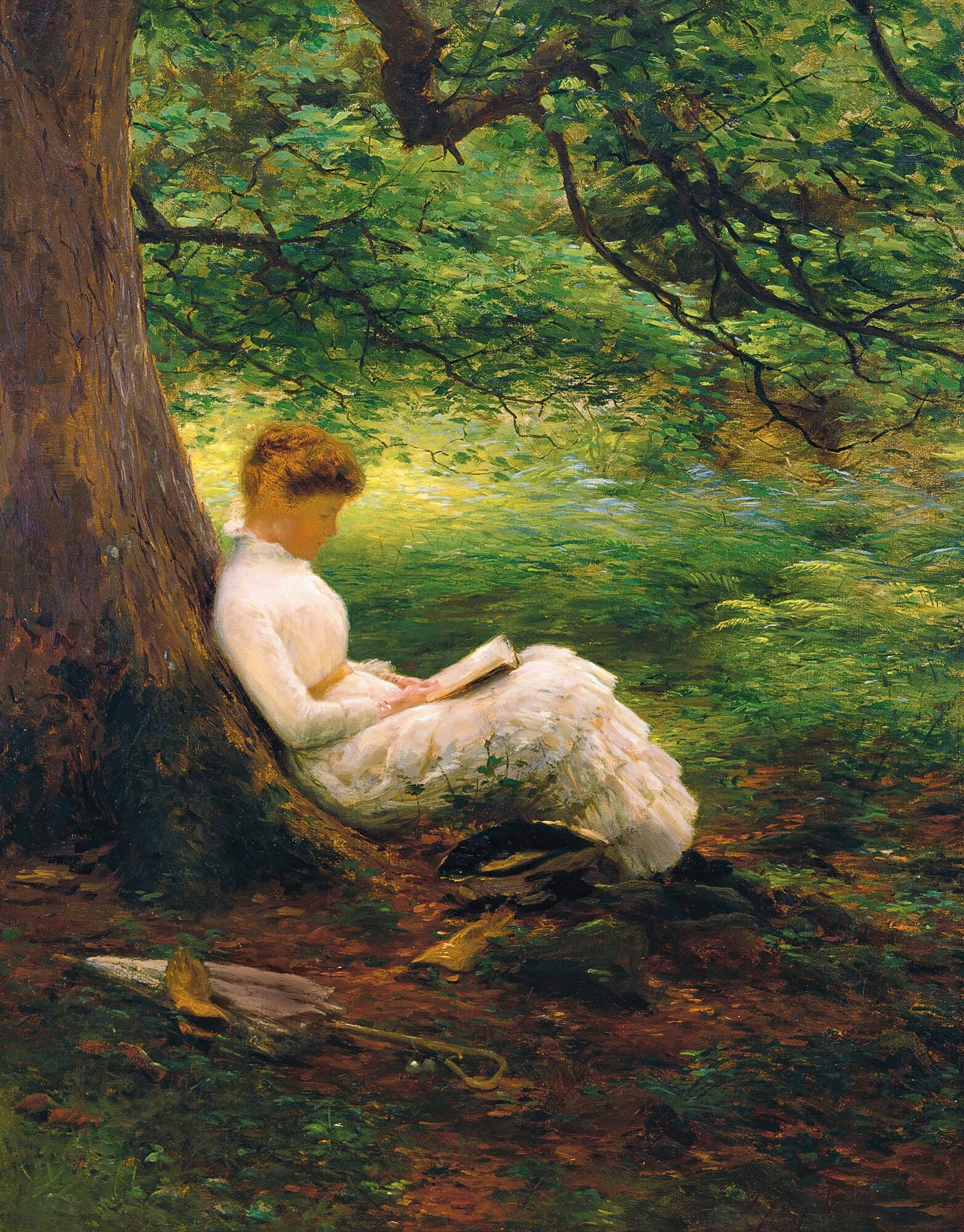
It’s happened a few times by now that I’ve found myself getting along more with people who read as a side hobby — statistically still considered “strong readers”, but way more interested in pursuing other passions.
Confronting myself with fresh perspectives and a generally more laid-back approach to books and culture at large has made another thing clear: if I was basically born with a book in my hands, why do I increasingly feel like I am pursuing my passion for reading the “wrong” way?
niches don’t exist in nature
Reading might be my main hobby, but it isn’t, and never has been, the only one. You’ll get the hang of it by browsing my posts in this newsletter, a nutshell version of my brain in which books have to flatshare with figurative arts, design, pop culture, and worst of all (shock horror!) technology.
Spending a lot of time in the “book-something” corners of the Internet, though, can make you feel like you’re not niching down enough if you don’t dedicate your whole digital identity to a single activity.
It’s not even a quantitative thing, related to how much or how fast you read; it’s more a matter of range. We’re all sick and tired to our bones of this, and yet the line between personal branding and personality is more blurred than ever, especially if you make some money out of it.
Again, leave it to the Internet to corrode and wash out the facets of human nature.
I don’t even feel like blaming people for coming across as monomaniac online: they’re most probably trapped in a system that exploits their passion and enthusiasm and makes it “weird” to switch up talking subjects once in a while.
I’m just a bit tired of it all, and that’s just the warm-up lap.
armchair reading is the death of reading
Let’s exorcise this feeling by articulating it first, and be rational later.
I read on multiple formats and devices, in pretty much every situation; reading has no sacred aura for me, it’s a natural instinct I fulfill anytime and however I want. And yet, somehow, that makes me feel like less of a reader.
I don’t want to touch the “paper books v. e-readers v. audiobooks” feud with a ten foot pole: I’ve made my stance clear in the paragraph above and dedicated a whole post to the e-reader “trend” as someone who has been reading e-books for the past fifteen years:

The point here is subtler than that, and is strictly related to the bitter aftertaste of classism I feel whenever someone scorns me, or anyone else for that matter, for reading used or library books, or crunching some pages on the phone during a train ride.
Yes, I can read while on the move, at cafès, in crowded rooms, with or without background music —instrumental or not— and even with the TV on. I have four library cards scattered across Italy and a tiny e-reader with modded open-source software on it. I’m a book cockroach more than a bookworm.
And I get that this is not a romantic or idealized reading life out of a Pinterest board: it’s part of a life of small apartments and loud households, of tight schedules and ugly chores. It’s either this or not reading at all.
I understand the appeal of having small rituals, though I’m extremely bad at that; my reluctance to give myself some grace and carve out more dedicated reading (or meditating, or crafting…) time will probably backfire spectacularly in the near future.
But if we’re talking about books, specifically, I think limiting the conditions you deem fit for reading can be detrimental. Books have luckily been unchained from furniture for centuries now, they can withstand a park bench or a doctor’s waiting room, for a start.
Reading as an activity is more resilient than you think, and the more you train yourself to read in your spare time, the more you’ll naturally gravitate towards books as a result.
books do not exist in a vacuum
When I want to cause some drama, I say that books are my favorite media, my preferred choice for entertainment rather than, say, Netflix or a Nintendo Switch game (though I’d commit heinous crimes for Pokopia right now).
They’re obviously much more than that, but it’s still the truth.
Maybe choosing Media studies over Literature at university shaped me into this philosophy, but I think that a rich, fulfilling cultural life can’t sussist on fiction books only, even if you’re into classics.
Fiction and non-fiction books exist in an ecosystem of print and digital media; stories have gotten translated, adapted, retold, betrayed and elevated and transformed into something else entirely for millennia, and that’s the beauty of it.
The quality of that is besides the point here: forming judgement requires actually engaging with both the source medium and its derivations, with an open mind and a critical eye.
anything worth doing is worth doing badly
If relating to books and stories in a playful, unorthodox way makes me less of a reader to anyone, than so be it.
I’m too tired to niche down again, here or work, or in real life, or anywhere else. I just hope you will join me, it’s quite fun around here.
Talk to you soon!
Love, Francesca